Color starts
with a relationship.
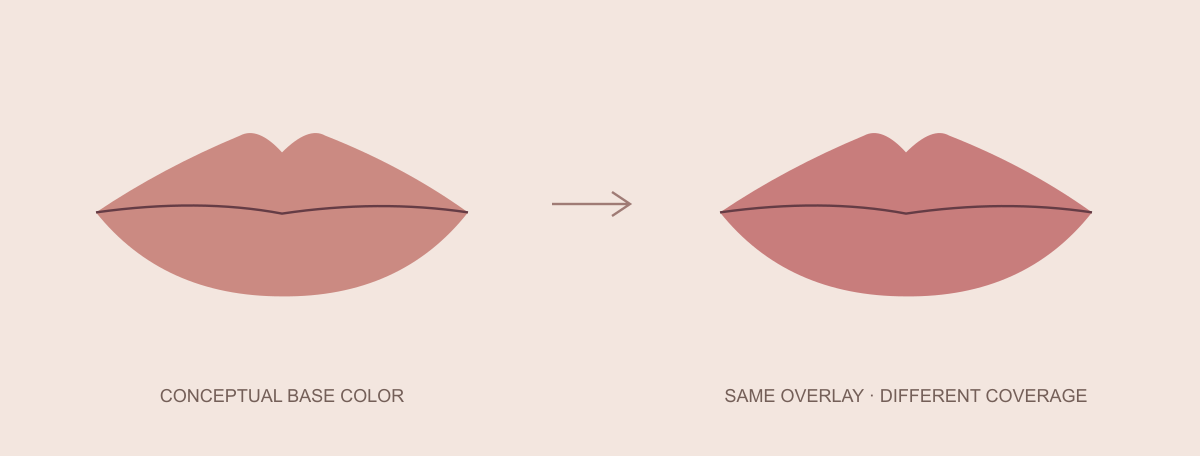
The same color layer can look different over different base colors. Explore the idea, then turn it into better questions about shade, coverage and contrast.
Start with depth.
Compare a candidate shade with both your skin and your natural lips. A color can be close to one and sharply different from the other. Decide whether you want a quiet continuation or a deliberate contrast before treating a light or dark shade as a mistake.
Then compare undertone.
Hold similar-depth color references beside one another. Notice whether you prefer a warmer brown or peach direction, a cooler rose or berry direction, or a more neutral balance. Warm and cool are comparison tools, not rules about what you are allowed to wear.
Read coverage separately.
A dark-looking tube may create a transparent wash. A pale-looking tube may create an opaque layer. Ask for one-layer and built-up examples, ideally on lips with a similar natural depth to yours. A named shade or product illustration cannot substitute for that evidence.
Use texture as another choice.
Shine, satin and matte describe surface appearance. They do not independently tell you opacity, transfer resistance or comfort. Decide which properties you need to compare rather than treating all of them as one product score.